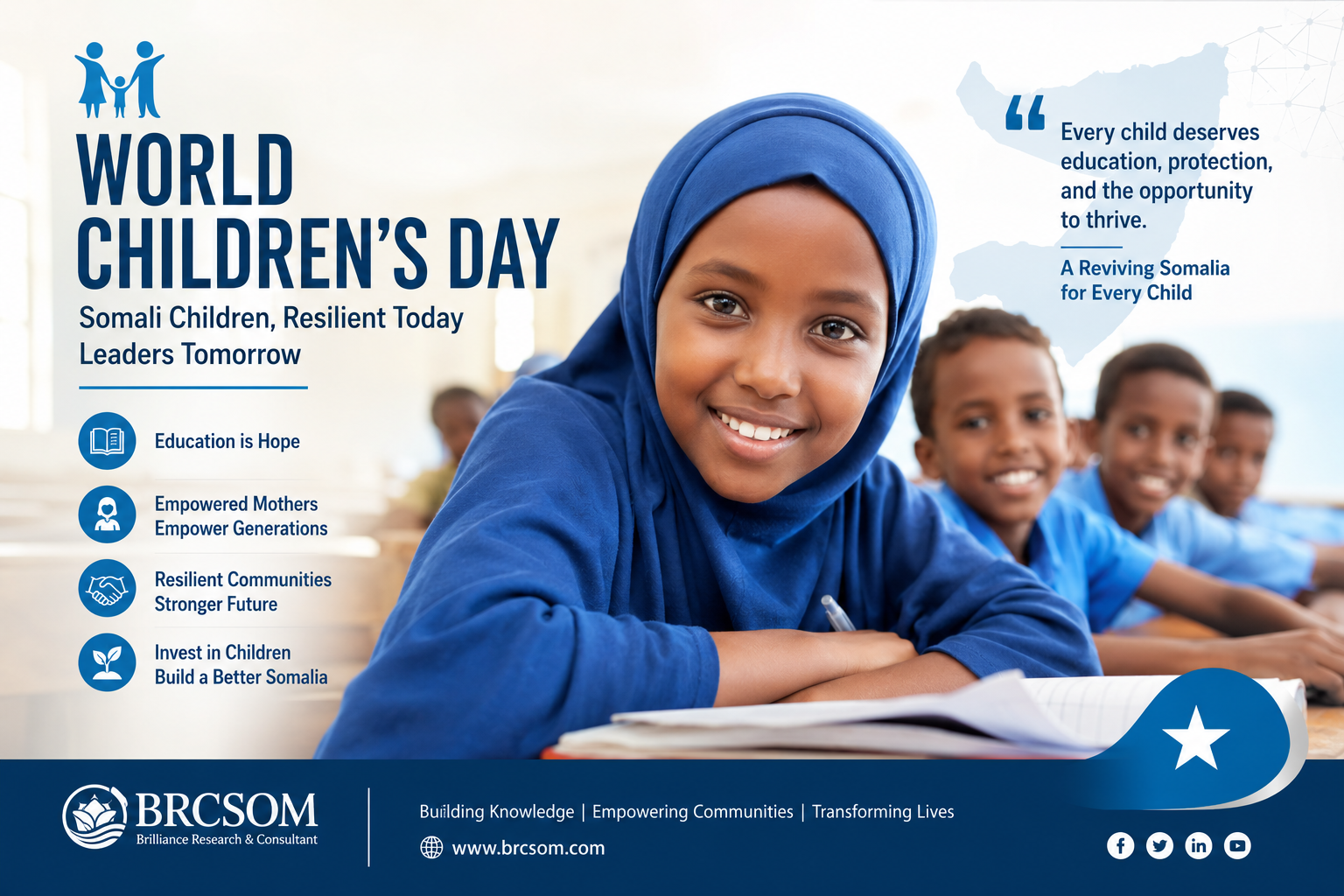
On the World Day of Childhood, global attention turns to the conditions of children living in conflict-affected and humanitarian crisis regions. Somali children remain among those who have faced some of the most severe and prolonged challenges over the past three decades, driven by civil conflict, recurring droughts, widespread poverty, displacement, and the collapse of state institutions.
However, Somalia’s present reality cannot be reduced solely to hardship. In recent years, the country has begun to show growing indicators of recovery and institutional rebuilding, particularly in the education sector, women’s empowerment, and child welfare systems.
Education Challenges and Access Gaps
According to the United Nations Children’s Fund (UNICEF), more than three million Somali children remain out of school due to multiple structural and humanitarian factors, including poverty, insecurity, long distances to educational facilities in rural areas, and shortages of qualified teachers—especially female educators. Decades of instability have resulted in entire generations being deprived of their fundamental right to education. (UNICEF Somalia – Education)
Human rights organizations further report that Somali children have borne the heaviest burden of armed violence, drought, and displacement. In some regions, schools were either targeted, damaged, or forced to close, leaving thousands without access to basic education, healthcare, and protection services. (Human Rights Watch – Somalia Reports 2023/2025)
Signs of Recovery in the Education Sector
Despite these challenges, Somalia has recently intensified national and international efforts to rebuild its education system as a cornerstone of long-term stability and development. The Federal Ministry of Education, in collaboration with international partners and local stakeholders, has expanded access to schooling, improved teacher training programs, and modernized curricula.
Flexible and community-based education models have also been introduced to reach children in rural, nomadic, and internally displaced communities, helping reduce barriers to access and improve continuity of learning. (UNICEF Somalia – Education Initiatives)
Girls’ Education as a Key Indicator of Progress
Girls’ education has emerged as one of the most significant indicators of social transformation in Somalia. According to data from the Somali Ministry of Education, the proportion of girls participating in national secondary examinations increased from approximately 26% in 2015 to around 42% in 2025. This upward trend reflects gradual but meaningful progress in expanding educational opportunities for girls and enhancing women’s participation in public life.
Development experts widely agree that investing in women’s education is one of the most effective strategies for improving child welfare. Educated mothers are more likely to ensure better nutrition, healthcare access, and schooling for their children, creating a positive intergenerational impact.
International development research consistently shows that girls’ education contributes to poverty reduction, economic growth, and long-term social stability by breaking cycles of marginalization and dependency. (UNICEF – Girls’ Education)
Resilience Amid Continuing Challenges
Despite ongoing humanitarian pressures, including climate-related droughts, funding shortages, and security concerns, Somalia continues to demonstrate resilience and gradual recovery. State institutions are increasingly reasserting their functions, while territorial stabilization efforts against extremist groups have enabled thousands of children to return to school after years of disruption.
Government statements in recent years highlight rising investment in teacher recruitment, infrastructure development, and education sector expansion as part of broader nation-building priorities.
Conclusion
The future of Somalia’s children cannot be secured through humanitarian assistance alone. It requires sustained investment in education, protection, equality, and opportunity. Every newly opened classroom, every girl enrolled in school, and every empowered mother represents a decisive step away from decades of instability toward a more inclusive and resilient society.
On this World Day of Childhood, hope remains firmly rooted in the emergence of a new Somali generation—one capable of transforming a history of hardship into a national narrative of recovery, dignity, and sustainable development.
With sincere regards,
Professor Dr. Shafie Yusuf Omar
Director General of Research and Consultancy
Brilliance Research & Consultant (BRCsom)
www.brcsom.com