Abstract
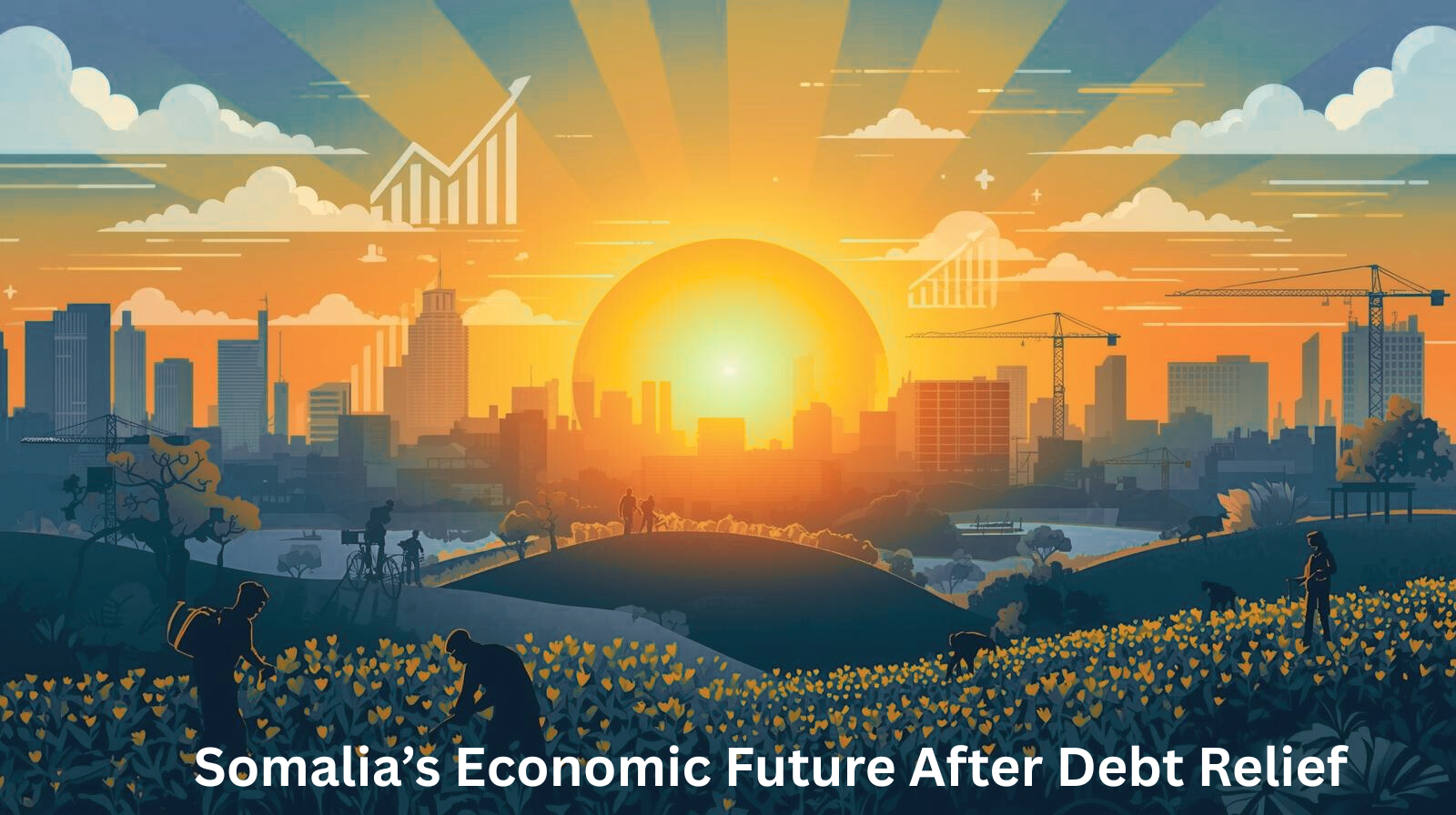
The milestone achieved by Somalia in reaching the Heavily Indebted Poor Countries (HIPC) Initiative Completion Point in December 2023 marks a watershed moment: external public debt has been reduced from approximately 64 % of GDP at end-2018 to less than 6 % by end-2023. (IMF) This debt relief offers a unique window for economic transformation—yet the prize is fragile, contingent on credible reform, transparency, and inclusive governance. This article analyses the opportunities and risks inherent in this transition. It examines in context the structural reforms needed, the external environment of international partners (especially International Monetary Fund (IMF) and World Bank), and crucially, the domestic political and institutional challenges that may undermine the potential. The piece raises a strong caution: without genuine accountability, inclusive governance, and a common national vision—rather than self-interest and elite capture—the debt relief may become an opportunity lost.
- Introduction: A New Chapter Opens
In December 2023, Somalia celebrated a long-awaited achievement when the IMF and World Bank approved its reaching of the HIPC Completion Point, unlocking an estimated USD 4.5 billion in debt-service savings. (IMF) For a country scarred by decades of conflict, drought, economic fragmentation and institutional collapse, this milestone signals more than symbolic relief—it offers breathing-space and a chance to reshape the economy. Yet behind the celebratory headlines lies a sobering reality: debt relief is not an end in itself. It is the beginning of a test—a test of whether institutions, governance and national cohesion in Somalia can be brought to a level where this new fiscal space becomes meaningful for citizens.
Especially in the Somali context—where the state lives with poverty, instability, high unemployment and deep inequality—the stakes are high. Debt relief, while necessary, will be insufficient unless it is matched by better revenue mobilisation, stronger public financial management, inclusive governance, and a common vision that rises above clan or political factionalism.
- From Relief to Reform: The True Challenge
The IMF/World Bank documentation is clear: reaching the HIPC Completion Point reduces the burden of debt service and opens access to external financing, but only if reforms are sustained. (IMF) For Somalia, this means:
- Mobilising domestic revenue in a country that still relies heavily on external aid and remittances.
- Strengthening public financial management (PFM) systems, audit, accountability and procurement processes. (IMF eLibrary)
- Ensuring sound debt-management capacity so that future borrowing remains sustainable.
These reforms are not optional: the international community emphasises that achieving debt relief is just the starting line. Without credible implementation, the benefits may be diluted. For Somalia, years of institutional weakness mean the runway is long and the margin for mis-step small.
- Opportunities: A Chance to Build Something New
With the external debt burden largely removed, Somalia has a real chance to re-invest in growth sectors and inclusive development. Some of the key opportunities include:
- Private‐sector revitalisation and job creation: Debt relief may allow the state to reduce interest and debt-service burdens, freeing up resources (or at least the possibility) for infrastructure, education, and enterprise support.
- Access to concessional finance: By becoming eligible again for more normalised relations with multilateral lenders, Somalia can tap into investments in human capital, energy, transport, and climate resilience. (World Bank)
- Improved investment climate: The signal of external creditors’ confidence may help attract private investment and diaspora engagement, provided governance improves.
- Fiscal space for social development: Reduced debt service gives space (in theory) for health, education and social-protection investment, critical in a country where youth unemployment and inequality are stark.
In short: the debt relief offers Somalia the possibility of moving from mere survival and external dependency to the beginnings of a growth path anchored in national priorities, rather than simply servicing old obligations.
- Emerging Risks: Why the Chance Could Be Lost
However, the flip side is clear: the window may be narrow and easily squandered. Several significant risk-factors loom:
4.1 Governance & Corruption
Somalia’s record of project implementation, aid-absorption and public procurement has been marred by weak oversight, elite capture and lack of transparency. if these patterns continue, the additional fiscal space will vanish into leakages rather than reach citizens.
Asset-by-asset, project-by-project, the risk is that donors and development partners will lose confidence—or require stricter conditions—if corruption persists. That would defeat the purpose of debt relief, which is to stimulate productive investment, not re-channel resources back into unproductive costs.
4.2 Fragmentation and Lack of Inclusion
The federal structure, relations with regional states such as Puntland and Jubaland, and evolving constitutional arrangements are central to Somalia’s journey. If political manoeuvring or constitutional changes favour narrow interests (for example, the entrenchment of a particular individual or clientele group) rather than a genuinely inclusive national agenda, there is a risk that the benefits of debt relief will be unevenly distributed or co-opted by elites.
Reports and social commentary suggest concern that the current administration of Hassan Sheikh Mohamud may accelerate constitutional changes to favour its own power base. In an environment of weak oversight, that risks undermining both public trust and international investor confidence.
4.3 Absence of a Shared National Vision
Debt relief gives freedom—but freedom without direction can lead to drift. If government, private sector, civil society and regional states do not co-develop a national economic strategy that aligns fiscal reform, investment priorities and social inclusion, then resource flows may be mis-directed or remain in donor-driven silos. The point is that for debt relief to translate into development, Somalia needs alignment across actors, not just top-down policy pronouncements.
4.4 Elevated Vulnerabilities
Even with the debt burden reduced, Somalia remains fragile: drought, climate shocks, security risks and nascent institutions still dominate the horizon. The IMF’s own analysis emphasises that while debt has been reduced, capacity to repay future obligations remains vulnerable and contingent on reform success. (IMF eLibrary) In other words: the relief is meaningful, but only if sustained by resilience in institutional, economic and social systems.
- Opposition View: The Danger of Overselling the Relief
From a critical perspective, one might argue that debt relief has been oversold as a panacea. Several analysts caution that writing off debt is only meaningful if matched by structural transformation; otherwise it merely postpones the underlying crisis and may invite renewed borrowing under weaker bargains. For example, commentators point out that eligibility for HIPC often comes with conditions that risk reducing social expenditure or enforcing austerity-type measures. (Reddit)
In Somalia’s context, there is also the risk that external finance will once again drive donor-led projects with limited local ownership, failing to change the structures of inequality, unemployment and exclusion that underpin chronic fragility.
In short: the opposition view warns that debt relief is necessary, yes—but insufficient; and without deep reform and accountability, the superficial headlines of “we are debt free” may mask persistent structural deficits.
- Policy Recommendations: What Must Be Done
Given both the promise and pitfalls, the following actions are essential for Somalia to turn this milestone into durable gains:
- Strengthen transparency and accountability: Publish budgets and audit reports, enforce procurement integrity, engage civil society in oversight. Corruption cannot be the default.
- Mobilise domestic revenue: Reduce dependency on donor funds by broadening tax base, improving customs/tariffs, strengthening domestic institutions—so that spending reflects Somali priorities.
- Adopt an inclusive national economic strategy: Bring federal government, regional states, private sector and civil society together around shared goals—job creation, youth empowerment, inclusive growth.
- Protect social expenditure: Ensure that freed fiscal space is directed to health, education, and infrastructure—not captured by unproductive expenditure or elite projects.
- Ensure constitutional clarity and regional inclusion: Avoid power-consolidation that excludes key regions like Puntland and Jubaland; build institutional legitimacy through inclusive governance.
- Monitor and manage new borrowing carefully: Even with debt reduced, new borrowing must be concessional and aligned with productive investment—not short-term consumption or vanity projects.
- Embed resilience into the system: With climate risk, security threats and global shocks, Somalia must build adaptive institutions and infrastructure, not just assume stability.
- Conclusion: The Moment of Truth
Somalia’s achievement in securing debt relief under the HIPC framework is historic and deserves celebration. But the real work begins now. The freed resources and improved external credibility are enablers, not automatic fixes. If systemic corruption continues, if regional exclusion and elite capture persist, if there is no shared national vision beyond narrow interests, then this chance may slip away.
The government, private sector, regional authorities and citizens must together seize this moment—not to perpetuate old patterns, but to build something new. Poverty, unemployment, and instability have been entrenched too long for superficial change. Somalia must rise to the challenge of mixing accountability with ambition, inclusion with investment, and vision with action.
As the famous proverb reminds us: “Opportunity is missed by most people because it is dressed in overalls and looks like work.” Somalia now has that opportunity. The overalls are on. Will we roll up our sleeves?
Brilliance Research & Consultant (BRCsom)
www.brcsom.com info@brcsom.com