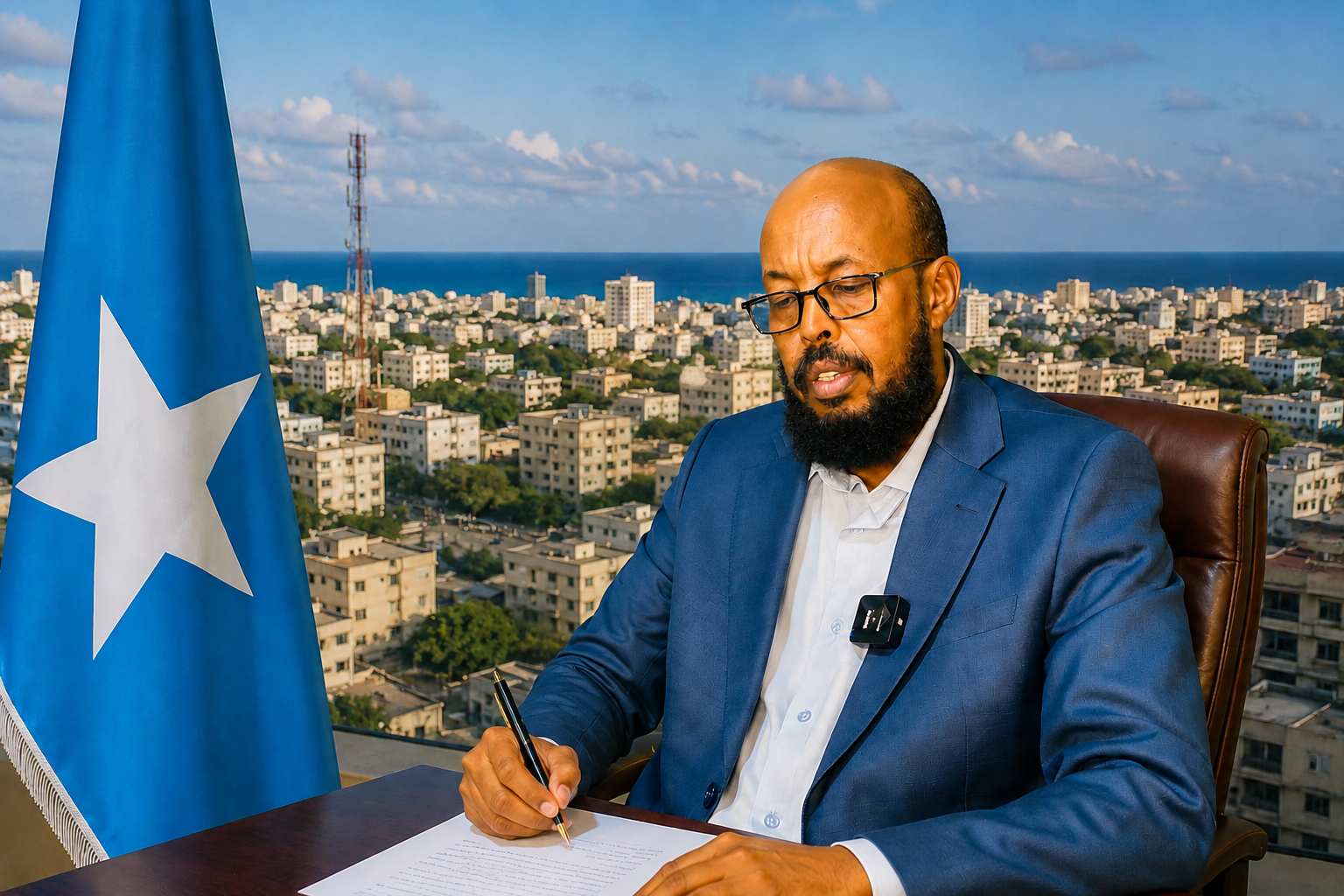
The Case for H.E. Hassan Ali Khayre: A Modern Statesman for Somalia’s Critical Moment
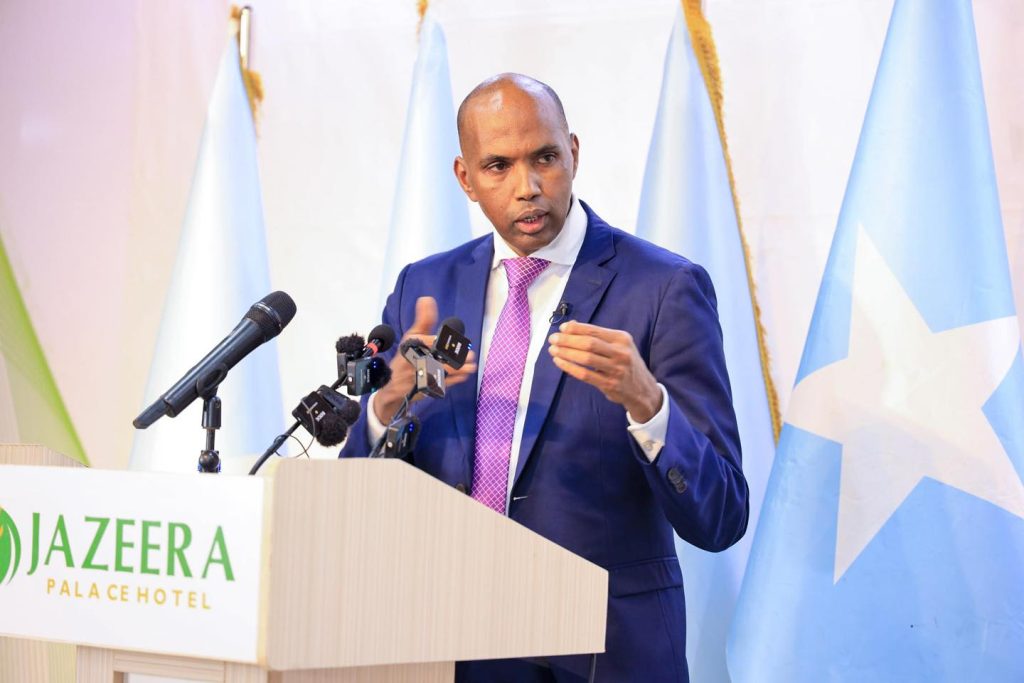
Abstract Summary of Hassan Ali Khayre
Hassan Ali Khayre represents a distinct model of Somali political leadership grounded in institutional reform, national unity, and pragmatic international engagement. His 2017-2020 tenure as Prime Minister demonstrated a departure from clan-based patronage systems toward governance defined by procedural discipline, financial transparency, and citizen-based legitimacy. Key achievements included the successful negotiation of Somalia’s Heavily Indebted Poor Countries (HIPC) debt relief milestone, the brokering of a 45-day peace agreement in Galmudug, and the strategic protection of vital remittance networks from international sanction. This record established him as a credible figure for both domestic constituencies—including youth, business leaders, and civil society—and the international community. Khayre’s leadership philosophy advocates for a modern, self-reliant Somalia that solves its challenges through African-led solutions while engaging the world through a foreign policy of mutual respect and zero problems.
Somalia at a Crossroads: The Need for a Reformist, Non-Clan, Internationally Trusted Leader
Somalia stands at a decisive juncture in its contemporary history. The current global political environment is characterized by rapid realignment, where state stability is increasingly contingent upon disciplined governance, institutional integrity, and strategic diplomatic engagement (Hassan, 2023). For Somalia—a nation long impacted by political fragmentation, systemic corruption, and persistent insecurity—the choice of leadership in the coming period will determine whether it consolidates a path toward stability or enters a phase of deepened crisis.
In this context, the record of H.E. Hassan Ali Khayre, Prime Minister of Somalia from 2017 to 2020, offers a substantive case study in reform-oriented governance. His tenure demonstrated that institutional progress, financial discipline, and national cohesion are achievable even in a post-conflict setting. Unlike traditional Somali political models rooted in clan patronage, Khayre’s leadership was anchored in principles of citizenship-based inclusion, rule-based administration, and accountability to national rather than sectional interests (World Bank, 2020). This document assesses his key policy achievements, leadership style, and the relevance of his model for Somalia’s current political moment.
From Analysis to Action
This document presents BRCsom’s policy-oriented analysis for stabilizing Somalia through accountable leadership and inclusive governance. It moves from a diagnostic assessment of Somalia’s critical needs to a prescriptive case built on a proven record of reform.
- Institutional Reforms and Fiscal Discipline: 2017–2020
Khayre’s administration prioritized the reconstruction of core state functions, with particular emphasis on public financial management. For the first time in decades, multiple federal institutions, including key security agencies, transitioned to a system of regularized and transparent payroll disbursements (IMF, 2020). This shift reduced informal remuneration practices and improved operational morale.
The most significant macroeconomic achievement was the completion of critical milestones under the Heavily Indebted Poor Countries (HIPC) Initiative. In March 2020, Somalia reached the Decision Point under the HIPC framework, a step that unlocked access to multilateral debt relief and concessional financing after over 30 years of financial isolation (World Bank, 2020). This process required stringent reforms in public financial management, anti-corruption measures, and economic reporting, which were implemented under Khayre’s executive oversight.
Concurrently, his government enacted Somalia’s first National Petroleum Roadmap in 2019, establishing a regulatory framework for future resource management. This policy laid necessary groundwork for transparent and competitive hydrocarbon sector development (Ministry of Petroleum & Mineral Resources, 2019).
Khayre also engaged discreetly with international regulators to safeguard vital remittance flows. When several Somali money transfer operators, including the Barakat network, faced potential designation under global counter-terrorism financing regulations, his diplomatic interventions helped avert broad-based sanctions, preserving a critical private-sector channel (Abdulle, 2021).
- A Results-Based Leadership Model
Khayre’s approach to governance departed from Somalia’s entrenched political culture, which often prioritizes clan consensus over administrative performance. His insistence on procedural regularity, competitive recruitment, and audit-based accountability challenged networks accustomed to informal influence. While this generated resistance from some political actors, it resonated with broader public sentiment.
Survey research conducted by the Somali Civic Forum (2022) across major urban centers—including Mogadishu, Garowe, Baidoa, Kismayo, and Hargeisa—found that Khayre was widely perceived as a “patriotic figure who placed national interest above clan interest.” This perception was particularly strong among youth, business communities, religious leaders, and women’s groups, who associated his tenure with a renewed sense of collective possibility.
The Galmudug Mediation: A Case Study in Conflict Resolution
A concrete example of his hands-on political management was the 2018–2019 mediation in Galmudug State. Following sustained hostilities between the Ahlu Sunna wal Jama’a (ASWJ) movement and regional authorities, Khayre personally facilitated a 45-day dialogue that resulted in a power-sharing agreement and de-escalation (African Union, 2019). This agreement was later stabilized through support for local reconciliation mechanisms, notably the Galka’yo Peace House, which provided a sustained forum for inter-clan dialogue (International Crisis Group, 2019). The process is frequently cited as a rare example of federally led, locally owned peacemaking in Somalia’s recent history.
- Security Strategy: Integrating Governance and Counterinsurgency
Khayre’s security policy reflected contemporary counterinsurgency theory, which emphasizes political and economic measures alongside military action (Kilcullen, 2019). His administration invested in community policing, localized intelligence networks, and youth employment programs intended to reduce recruitment into armed groups. Military operations were generally conducted without excessive publicity, focusing on gradual territorial consolidation rather than symbolic announcements. This low-profile, integrated approach was noted by international partners for its operational consistency (UNSOM, 2020).
International Diplomacy and Credibility
Diplomatic relations strengthened considerably during Khayre’s term. Key partners—including the United States, European Union, United Kingdom, Turkey, Norway, the African Union, and the Arab League—described his government as predictable and reform-oriented. This credibility facilitated renewed donor engagements and the resumption of budget support flows after years of hesitation (European Union, 2020). In multilateral forums, Khayre advocated consistently for Somali sovereignty while maintaining cooperative relationships with regional and international actors.
- Current Governance Challenges and Public Distrust
Since 2020, public confidence in federal institutions has deteriorated. Reports of mismanaged donor projects, politicized distribution of public land, marginalization of youth and civil society voices, and renewed clan polarization have fueled popular dissatisfaction (Rift Valley Institute, 2023). Many citizens perceive a return to narrative-driven politics, where rhetorical commitments are not matched by tangible service delivery or institutional reform.
This environment has heightened the public’s appetite for leadership characterized by administrative discipline and national unity. Khayre’s record, by contrast, is associated with a period of measurable institutional rebuilding and relative political coherence.
Khayre as a Unifying National Figure
For the 2026 electoral cycle, Khayre represents a candidate whose appeal transcends clan geography. He maintains recognition across Somalia’s 18 regions and is not associated with any particular militia or extremist faction. His platform emphasizes:
- Institutional continuity and reform
- Economic revival through private-sector growth
- Inclusive politics that incorporate women, youth, and minority communities
- A foreign policy based on sovereignty and partnership
This profile aligns with the preferences of business leaders seeking stability, civil society demanding accountability, and international partners requiring reliable implementation.
Conclusion: The Case for Experienced, Reform-Oriented Leadership
Somalia’s next presidential term will unfold in a complex regional and global climate. The country requires a leader who can balance domestic reconciliation with international diplomacy, institutional reform with political stability, and economic recovery with equity.
H.E. Hassan Ali Khayre’s premiership provides evidence that such balance is achievable. His tenure saw concrete advances in debt relief, financial governance, federal-state mediation, and strategic planning. Perhaps most importantly, he modeled a form of Somali politics in which legitimacy derives from performance and national loyalty—not clan affiliation.
For Somalia to navigate its current crossroads successfully, leadership matters. The case for Khayre rests not on rhetoric, but on a documented record of reform during one of the most challenging periods in recent Somali history.
This documented record of reform is not just a case for his leadership—it is the foundation for Somalia’s next chapter of stability, sovereignty, and unity.
References
Abdulle, M. (2021). Remittance flows and regulatory survival: The case of Somali money transfer operators. Journal of Somali Studies, 8(1), 45–67.
African Union. (2019). Press statement on the situation in Galmudug, Somalia. AU Peace and Security Department.
European Union. (2020). Somalia – EU cooperation framework 2020–2024. Directorate-General for International Partnerships.
Hassan, A. (2023). Fragile states in a multipolar world: Adaptation or irrelevance? Oxford University Press.
International Crisis Group. (2019). Somalia: A new approach for Galmudug (Africa Report No. 287).
International Monetary Fund. (2020). Somalia: Staff report for the 2020 Article IV consultation. IMF Country Report No. 20/123.
Kilcullen, D. (2019). The evolution of counterinsurgency: Theory and practice. Small Wars & Insurgencies, 30(1), 215–229.
Ministry of Petroleum & Mineral Resources. (2019). Somali petroleum roadmap. Federal Government of Somalia.
Rift Valley Institute. (2023). Political tensions and public trust in Somalia. RVI Briefing Paper.
Somali Civic Forum. (2022). Public perceptions of governance and leadership in Somalia. SCF Annual Survey Report.
United Nations Assistance Mission in Somalia (UNSOM). (2020). Report on security sector development. UN Security Council.
World Bank. (2020). Somalia reaches decision point under the enhanced HIPC initiative [Press release].
Contact:
Brilliance Research & Consulting (BRCsom)
www.brcsom.com | info@brcsom.com | +252 616 669 110